
Welcome to April’s funding update.
This update is split into three parts. Section A features funders that can support organisations and individuals with the cost-of-living crisis.
Section B features funders with upcoming deadlines. You’ll find funders with a local or regional focus first, and national funders second. The funders are listed in order of deadline date, soonest first.
Section C features funders who welcome applications at any time. Again, you’ll find funders with a local or regional focus first, and national funders second.
This update can only provide a snapshot of these funders so we recommend visiting the funders’ websites for full details before you apply. Most funders in this list have a website, which you can access by clicking on the name of the funder. Full contact details have been provided for funders that do not have a website.
A. Grants to support groups and individuals with the cost-of-living crisis
 Smallwood Trust – Women’s Urgent Support Fund
Deadline: 19th May 2023
Who can apply: Not-for-profit organisations including charities, CICs and voluntary and community groups that deliver services by and for women
Size of grant available: £15,000-£60,000
Priorities: The programme will provide emergency funding which helps to meet the following objectives:
- Women affected by the cost-of-living crisis and poverty gain confidence, tools, skills and support to build their financial resilience and improve their mental health
- Vital frontline jobs/roles and services are safeguarded or enhanced by the additional funding, allowing organisations to meet the increased need for their services
Over two rounds of funding, the Trust aims to commit 50% of the grants to projects that support women experiencing racial inequality and/or women with disabilities. There is also a focus on supporting organisations working with women from these key client groups:
- Women experiencing racial inequality
- Disabled women
- Women with No Recourse to Public Funds
- Women that are the sole parent to children under 18 years
- LGBTQ+ communities experiencing financial insecurity
Applications from smaller organisations are encouraged for this fund
How to apply: There will be information webinars for the fund on the following days:
- 4 May 2023, 10-11am
- 12 May 2023, 3-4pm
Full guidance, FAQs and an online application form can be found on the Smallwood Trust website
UK Youth – Cost of Living Fund
Who can apply: Charitable and not-for-profit youth organisations with an annual turnover of £500,000 or less and have been running for at least two year
Size of grant available: Organisations can apply for unrestricted three-year grants of up to 10% of their current turnover (for example, an organisation with a turnover of £250,000 can apply for up to £25,000 per year). Applications for £10,000 or under will be fast-tracked
Priorities: Grants are to help bring stability to youth organisations over a period of three years and to help mitigate the impact of the cost-of-living crisis, ensuring groups can continue to operate, cover bills, and pay staff salaries. At least 70% of an organisation’s beneficiaries should be 8-25
How to apply: Guidance notes and the online application are available on the UK Youth website – register on the website to access. UK Youth is also providing weekly Q&A webinars until 30th May. Book a place on the UK Youth website
Friends of the Elderly – Grants for Older People
Who can apply: Applications are only accepted from a Referral Agent who knows the older person in a professional or community capacity. Referral Agents can include: housing associations, local authorities, charities, community organisations, social workers, advice providers, health centres, cultural and religious centres etc
Size of grant available: Up to £500
Priorities: The funding is intended to support older people who are of, or over, state pension age (66 years) and living on low incomes in England or Wales. Four grant streams are available to help with home essentials, digital connection, financial support and essential living costs. The older person must be:
- Currently residing in England or Wales
- In privately owned, privately rented, or social housing (not in residential care or a nursing home)
- Of/over UK state pension age
- On a low income and with savings of less than £4,000
- A civilian (cannot have served in the UK Armed Forces)
Types of costs supported: There are four grant streams:
- Home Essentials – to help with the cost of replacing everyday items in the home (white goods such as washing machines, fridges, freezers etc. and furnishings), small home repairs and mobility adaptations
- Digital Connections – to help older people get online and stay connected and can be used towards the cost of equipment such as tablets and smartphones as well as Broadband/Wi-Fi/Mi-Fi (mobile Wi-Fi) costs
- Financial Support – to help with unexpected bills and large costs such as utility bills, funeral costs for loved ones, moving fees etc
- Essential Living Costs – to help with clothing, food, medicines, books, and anything that has become unmanageable either because of the Covid-19 pandemic or due to some pre-existing need
How to apply: Applications, guidance notes and FAQ are available on the Friends of the Elderly website
COSARAF Hardship Grants (for individuals)
Who can apply: Applications will only be accepted from recognised social organisations, such as charities, housing associations, schools and social services who are acting on behalf of a family or individual in need
Size of grant available: Up to £2,000 to cover a year’s worth of expenses but only in exceptional circumstances will a grant of over £500 be awarded
Priorities: Priority will be given to:
- The most financially excluded people
- Families over individuals
- Those with caring responsibilities
- Items that will make the most difference to the individual/family’s long-term future
Organisations can only apply once in a single year. Applicants must be able to demonstrate that they are taking advantage of all support offered by local services, including the referring social organisation
Types of costs supported:
- Household items (white goods and occasionally other items such as sofas or wardrobes)
- Basic living expenses (utilities or food)
- Work or education-related expenses (such as interview clothes, school uniforms, or laptops)
- Rent arrears and Council tax arrears, but only where there is a clear risk of homelessness (for rent arrears involving a social landlord applicants should outline what support has already been offered to the tenant)
- Contribution to immigration-related costs, where the current immigration status directly causes financial hardship to the applicant.
How to apply: Guidance notes and the application form is available from the COSARAF website
Crowdfunder UK/Sport England
Who can apply: Local sports clubs, Charities, community, voluntary and social enterprise sector organisations that deliver sport and/or physical activity in their local community, including organisations that are not solely or primarily sports organisations, town or parish councils delivering activity within their communities and educational establishments that provide access for their whole community
Size of grant available: Up to £10,000
Priorities: You will need a crowdfunding project in order to apply for this funding. If your application is approved, you will receive match funding of 50% up to a value of £10,000. To receive a pledge, you will need to have raised 25% of your initial target and raised it from a minimum number of supporters. Following receipt of a pledge, you will need to raise 100% of your target in order to receive the funds from Sport England.
The fund is focussed on recovery, reinvention and building resilience for organisations facing a broad spectrum of issues, including the emerging energy crisis.
How to apply: Full guidance how to start a crowdfunding campaign and more details on the eligibility criteria can be found on the Crowdfunder website
Energy Saving Trust Energy Redress Scheme
Who can apply: Charities, Community Interest Companies, Co-operative societies and Community Benefit Societies
Size of grant available: The amount of funding available through the scheme is reviewed on a quarterly basis. The minimum grant amount that can be requested is £20,000. The scheme can fund 100% of project costs and can cover revenue and capital costs
Priorities: The Energy Saving Trust has been appointed by Ofgem to distribute payments from companies who may have breached Ofgem rules. Eligible organisations can apply for funds to deliver energy related projects. These include:
- Supporting energy consumers in vulnerable situations – This core priority aims to help people who are most at risk from cold homes and high energy bills. Occasionally there may be additional priorities linked to a funding round e.g., a specific geographical focus or type of energy consumer. Any additional priorities will be made clear to applicants when a funding round opens
- Innovation projects – Innovative products and services related to energy that have a realistic prospect of delivering benefits to existing and/or future energy consumers and that help to reduce the environmental impact of energy use
- Carbon Emissions Reduction Fund – energy-related activities aimed at reducing carbon dioxide emissions from energy use. These projects must focus on energy generation, distribution or energy use
The scheme is not presently designed to support energy saving improvements or energy generation technology in individual community buildings or facilities.
How to apply: More information about applying for funding, including online registration and an application/guidance pack can be found on the funder’s website
B. Get in quick – deadlines are coming up!
1. Funders with a local / regional interest
Dudley Council Community Forum Grants
Deadline: Please see ‘How to apply’ section for the panel meetings of each Community Forum. Applications need to be received 21 days before the panel meeting. Any application that misses this deadline will be considered at subsequent meetings
Who can apply: Not-for-profit organisations including registered charities, CICs and constituted voluntary and community groups
Size of grant available: Up to £5,000
Priorities: Funding can be used for a wide range of projects and activities that benefit people and communities in Dudley borough, including but not limited to:
- Community gardening projects
- High street ‘in bloom’ initiatives
- Hosting community fun days
- Improving skills
- Promoting volunteering
- Providing learning opportunities
Funding can be used for capital costs such as purchasing equipment, vehicles, land or buildings, and/or revenue expenditure for proposed activities. Revenue costs must be one-off or strictly time limited. Funding must be spent within nine months of approval by the community forum. If (in exceptional circumstances) funding has been provided in advance, paid invoices/receipts must be provided to the council within three months
How to apply: Applications can be submitted at anytime and are considered at Community Grant Panel meetings which are typically held four times per year. Applications should be submitted at least 21 days in advance to be considered at the subsequent meeting. Later applications will be held over to the next available meeting. The next Community Grant Panel meetings are scheduled as follows:
- Brierley Hill – 8 June 2023
- Stourbridge – 8 June 2023
- Halesowen – 8 June 2023
- Dudley – 8 June 2023
- Dudley North – 22 May 2023
Urgent applications may be considered in between meetings at the discretion of community forum members.
Guidance notes and an application form are available from the Dudley Council website. Completed applications should be submitted by email
HAF – Holiday Activities and Food Provision for Summer 2023
Deadline: 15th May 2023
Who can apply: Voluntary and community organisations, not-for-profits and businesses can apply
Priorities: This programme is for organisations that would like to deliver activities for children in receipt of free school meals during the Summer holiday. Applicants can apply to deliver a combination of activities and food, or just one element of the programme
How to apply: Complete the online application on the Dudley HAF website
Wesleyan Foundation Community Grants – Heart of England Community Foundation
Deadline: 24th May 2023
Who can apply: Any type of constituted not-for-profit including registered charities, CICs and community groups with a constitution that have been operating for at least two years and have an income less than £500,000
Size of grant available: £2,000-£10,000
Priorities: The Fund aims to support registered charities and community groups working in the areas of health and wellbeing, education, equality and climate action in the West Midlands and Warwickshire. Grants can be awarded for applications demonstrating how the project will provide services and improve outcomes in one or more of the following goals:
- Good health and wellbeing
- Quality education
- Gender equality
- Reducing inequality
- Climate action
How to apply: Online application forms and guidance information are available on the Heart of England Community Foundation website
Co-op Community Dividend Fund
Deadline: 26th May 2023
Who can apply: Members of Central England Co-operative, including local good causes, community groups, charities, social enterprises and community interest companies, are eligible to apply as long as they:
- Have been a full member of Central England Co-operative for at least six months
- Are benefiting communities in which Central England Co-operative trades
- Are a not-for-profit organisation
Size of grant available: £100-£5,000
Priorities: Projects must align with at least one of the following areas:
- Access to food – improving access to food in a way that encourages healthy, balanced choices to be made
- Health and wellbeing – projects that directly or indirectly promote physical and mental health and wellbeing
- Inclusion projects – directly or indirectly support greater inclusion of vulnerable, excluded, or hard to reach groups
- Environment – inside and outside spaces that support increased sustainability, eg energy saving projects, sustainable travel, biodiversity and food security
How to apply: Guidance notes and an online application form are available on the Co-operative’s website
Postcode Local Trust
Deadline: 1st June 2023
Who can apply: Not-for-profit organisations including registered charities, CICs (schedule 1 and 2 only) and constituted voluntary and community groups with income less than £1million
Size of grant available: The following organisations can apply for grants of between £500 and £2,500:
- Companies limited by guarantee with an asset lock
- Constituted voluntary organisations with no charity number
- Excepted and exempted charities
The following types of organisations can apply for grants of between £500 and £25,000:
- Registered charities
- Community interest companies with an asset lock (schedule 1 and 2 only)
- Community benefit societies
Priorities: The funding is for projects that have a clear alignment with one of the Trust’s themes:
- Improving mental wellbeing
- Enabling participation in physical activity
- Enabling community participation in the arts
- Preventing or reducing the impact of poverty
- Supporting marginalised groups and tackling inequality
- Improving biodiversity and responding to the climate emergency
- Improving green spaces and increasing access to the outdoors
The funding should be spent within 18 months. In 2023, both project funding and unrestricted funding will be provided. Project funding is specifically for programmes of work which are limited in scope and seek to achieve particular outcomes. This may include core costs related to the delivery of the project such as utilities, salaries, venue hire, and other costs which make the activities possible. Unrestricted funding can be used for anything within an organisation’s charitable objects apart from what is listed in the ‘We do not fund’ list in the Trust’s 2023 guidance notes which can be found on the Trust’s website
How to apply: Applications open at 10am on 1st June for a minimum of 24 hours. Application questions will be available from the Postcode Local Trust website from 1st May
Bentley Advancing Life Chances Small Grants Programme
Deadline: 23rd June 2023
Who can apply: Charities, CICs and constituted voluntary and community groups within 20 miles of a Bentley location (nearest is Birmingham, postcode B24 9HF)
Size of grant available: £150-£500
Priorities: To support organisations working with vulnerable people, disadvantaged and under-represented communities. The programme’s areas of focus are:
- Access – Remove the barriers and improve access to services, education and employability
- Empowerment – Development of the life skills that enable people to be more self-confident, successful and thrive in life
- Quality of Life – Provide support to live a healthier life both physically and mentally
- Better Future – Safeguarding the environment, improving nature-deprived areas, drive improvement to ‘place’ and boosting community spirit
How to apply: Guidance and a link to the online application form can be found on the Bentley website
2. National funders
National Grid Community Matters Fund – Green Spaces
Deadline: 12th May 2023
Who can apply: Registered charities, non-profit companies limited by guarantee, constituted charitable organisations with no charity number
Size of grant available: There are two levels of funding:
- Up to £10,000 for registered charities or non-profit companies limited by guarantee
- Up to £2,000 for constituted charitable organisations with no charity number
Priorities: Local community projects that focus on the use of green spaces to bring communities together, encourage more wildlife and biodiversity, improve air quality, reduce noise and deliver health benefits as well as creating employment and volunteering opportunities
How to apply: Full guidelines and an online application form can be found on the Localgiving website
Thomas Wall Trust
Deadline: 15th May
Who can apply: To be eligible, applicants must:
- Be a UK charity that has been registered with the Charity Commission for at least three years
- Have an annual turnover of between £10,000 and £500,000
Size of grant available: £5,000
Priorities: The trust views communication skills as critical capabilities for people who want to improve their employment prospects, self-confidence, resilience, and life chances. The funding is for registered charities that are working to develop communication skills for people from disadvantaged groups who want to improve their employment prospects. As an inclusive charity, the trust welcomes proposals which target people experiencing multiple deprivation or other groups demonstrably facing major hurdles to employment, such as women, people with physical, mental, or learning disabilities, refugees and asylum seekers
How to apply: There is a two-stage application process.
- Stage one is to complete an online expression of interest form (available on the Trust’s website) which requires some basic contact details and a description of what the funding is required for
- Stage two is by invitation only and involves completing a more in-depth application form and to submit a project plan, budget, latest set of financial accounts and any relevant policies
Henry Smith Charity – Holiday Grants for Children
Deadline: 19th May 2022
Who can apply: Schools, youth groups, not-for-profit organisations and charities in the UK are eligible to apply
Size of grant available: £2,800
Priorities: The charity aims to provide children aged 13 years or younger who are disadvantaged, disabled or from areas of high deprivation with a short recreational holiday or outing they would not otherwise have the opportunity to experience
How to apply: An online application form and a set of guidelines can be found on the charity’s website
Lloyds Bank Foundation for England and Wales – Racial Equity Grants
Deadline: 31st May 2023
Who can apply: Registered charities and CICs (limited by guarantee or by shares under Schedule 2), with annual income of between £25,000 and £500,000. Further eligibility requirements apply to CICs as follows:
- Their Articles of Association need to show an asset lock is in place and they have named the organisation that will receive the company’s assets on dissolution
- The must have at least one set of annual accounts filed with Companies House that show a track record of frontline delivery. They must also have filed their CIC Annual Report CIC34 for the last year and be able to submit their profit and loss account for their last financial year
- They must have at least three unrelated Directors sitting on their Board who are registered with Companies House
- The must show that no Director holds more than 50% of the company’s voting rights
Size of grant available: £75,000 over 3 years
Priorities: Unrestricted grants for applicants that are working with people experiencing inequity because of their race or ethnicity. The funding is for organisations who are led by the communities they serve and alongside providing immediate crisis support and working with people over the longer term to help them break free from poverty and achieve their potential. Applicants must be delivering their services in the following way:
- In-depth services – delivering a range of services supporting individuals through a structured pathway over a prolonged period. This could include services to overcome immediate needs but will also lead to longer-term support
- Personal plans – working together with the people they support to understand the challenges they may be experiencing and agree on how to help them find a way to overcome them
How to apply: The guidance notes and all other relevant documents can be found on the Lloyds Bank Foundation for England and Wales website
C. No deadlines
1. Funders with a local / regional interest
Alfred Haines Charitable Trust
Types of organisation supported: Smaller charities working in Dudley borough
Size of grant available: £250 to £2,000
Priorities: Specific projects that help people improve their quality of life
How to apply: Applications should be made in writing only. They can be made at any time and are reviewed quarterly. Applications should be sent to The Alfred Haines Charitable Trust, Dale Farm, Worcester Lane, Sutton Coldfield, B75 5PR
Dumbreck Charity
Who can apply: Registered charities based within the West Midlands
Size of grant available: £500 – £2,000
Priorities:
- Animal welfare and conservation
- Children’s welfare
- Care of the elderly
- Care of those who are physically or mentally disadvantaged (the charity uses the term ‘handicapped’)
- General medical
How to apply: Apply in writing with a copy of the latest accounts to: The Dumbreck Charity, 41 Sycamore Drive, Hollywood, Birmingham, B47 5QX
West Midlands Community Green Grants
Who can apply: Not-for-profit organisations based in the West Midlands Combined Authority area including charities, CICs and voluntary and community groups that have a constitution
Size of grant available: There are two grant sizes available:
- Small grants of between £3,000 and £25,000
- Large grants of between £25,000 and £100,000. (These are limited and will be reserved for larger and more ambitious projects)
Priorities: Funding is intended for projects that tackle green deprivation and improve the local environment by:
- Increasing or improving green/blue spaces close to where people live
- Connecting people to nature, especially communities experiencing green deprivation
- Enhancing the local environment and increasing biodiversity
- Priority will be given to projects delivering in areas of multiple deprivation and communities where there is limited access to green space. Projects should demonstrate a commitment to increasing biodiversity
Small grants can be used for projects, such as the following:
- Projects focused on increasing biodiversity such as tree planting, gardening, habitat creation, pollinator projects, improving canals and rivers
- Turning unused viable land into pocket parks or accessible green space
- Nature playgroups that give children and families with no regular access to green space opportunities to experience hands-on activities such as growing fruit and vegetables
Large grants can be used to support more ambitious activities, such as:
- Developing green corridors that link parks, community gardens, and other green spaces
- Developing of new community green spaces that increase local access
- Projects that significantly improve the biodiversity of the area and promote behavioural change on accessing green spaces
How to apply: Guidance notes and an online application form are available from the Heart of England Community Foundation website
2. National funders
James Ahern Foundation
Who can apply: Individual young people and local youth groups
Size of grant available: Discretionary
Priorities: Grants are available for individuals or local youth groups for projects that enable young people, particularly those with mental health or addiction issues, to pursue their passion in life. The funding aims to help young people who might be suffering a disadvantage through disability, social or economic background, mental health or addiction issues or just struggling to find their way in life but have a passion that they want to pursue. The grants can be used to support young people who have a passion in any field. Some examples of grants that have been given out include:
- Music – starting out as a DJ or looking for studio time to cut a demo or a band that needs a helping hand
- Work – course fees, uniforms or travel assistance to pursue a fledgling career that is inspired by a special passion
- Sport – support to attend a training camp or purchase new kit
- Travel – support to work on an environmental or economic project or with children overseas
How to apply: To apply, complete the application form or send an email to info@jamesahernfoundation.org. The online application form can be found on the James Ahern Foundation website
National Lottery Community Fund – Climate Action Fund: Energy and Climate
Who can apply: Place-based partnerships, UK-wide partnerships, single voluntary or community organisations
Size of grant available: £500,0000-£1.5million
Priorities: Funding is intended to support projects that:
- Encourage communities to use energy in an environmentally friendly way
- Bring communities together so that they can explore ways to promote energy efficiency
- Enable communities to understand and engage with opportunities for clean energy generation, which do not use fossil fuels
There is a particular focus on activities which engage with communities to:
- Educate, inspire, and start community-led energy action that leads to a reduction in carbon emissions over the long-term. This includes demonstration projects that people can visit in their community
- Build skills, tools, and resources to enable local action, such as, training community energy champion, exploring cost-effective easy to use solutions such as draft excluders or using LED bulbs
- Share skills with people in the community so they can get involved in projects where they can generate their own energy though renewables. The funder will not fund the purchase of solar panels, wind turbines or other generators of renewable energy. However, the funder can fund groups to engage with communities and help them build their understanding about community energy projects
- Use data to encourage action and positive behaviour change
Grants can be used to cover:
- Staff costs
- Volunteer expenses
- General project costs
- Engagement activities
- Learning and evaluation
- Utilities or running costs
- Organisational development and management costs
- Some capital costs – this could be for buying equipment or buying, leasing, refurbishing or developing land and buildings, or other construction-related work
It is expected that most funding will go towards revenue costs
How to apply: There is a two-stage application process:
- Stage 1 applications are accepted on a rolling basis. Notifications are expected within ten weeks
- Stage 2 will require applicants to submit a full proposal. Final decisions are expected within four months
The fund is expected to stay open until at least December 2023, depending on volume of interest. There will be virtual information sessions on the following days:
- 23 May, 12:00 to 12:45
- 20 June, 12:00 – 12:45
Guidelines and an online application form can be found on the National Lottery Community Fund website
Benefact Trust – Building Improvement Grants
Who can apply: Churches, cathedrals and Christian charities
Size of grant available: Discretionary. Please note, applicants are expected to have secured at least 30% of their total project costs before applying
Priorities: This fund aims to provide essential support to protect and enhance Christian church and charity buildings, ensuring their continued use and viability, and the safeguarding of their heritage. Funding can be used to support direct capital costs relating to the following types of work:
- Essential, one-off repairs or other capital works to ensure the continued use or viability of a building (capital work must be considered urgent or necessary within 12 months)
- Minor capital works or equipment purchases to meet operational or accessibility requirements (eg essential operational equipment, AV equipment, hearing loops, ramps etc)
- Conservation or restoration of historic features (eg stained glass, carvings, interior, furnishings, clocks, tower bells, organs etc) that contribute to the preservation and appreciation of a building’s heritage
- Other aesthetic enhancements (eg interior decoration, furnishings or public realm improvements) to improve indoor or outdoor spaces for users
- Energy efficiency/renewable energy measures (eg heating/lighting upgrades, solar panels etc) that improve the sustainability of church buildings/facilities and enable their continued use
How to apply: The average decision time for smaller grants (up to £25,000) is two months. Larger grants (over £25,000) are considered at grants committee and board meetings and can take between four and six months. Guidance notes and an online application form are available from the Benefact Trust website
Architectural Heritage Fund (AHF) – Project Viability Grants for England
Who can apply: Any type of incorporated charity (CIOs, charitable companies, community benefit societies), CICs limited by guarantee and not-for-profit companies limited by guarantee
Size of grant available: Up to £10,000
Priorities: The funding is intended to help not-for-profit organisations establish whether their project is feasible, ie, how does the proposed particular piece of work or activity help move the project forward and contribute towards revitalising a historic building. At the end of the funded work, organisations should be able to decide whether to commit to further costs, risk and effort in developing their project and have a clear idea of the next steps to be taken. Applications are welcome from across England, but priority will be given to projects that:
- Involve the new use of a vacant historic building
- Help revive high streets
- Are in the top 30% most deprived areas
- Involve and support diverse communities (traditionally underrepresented among heritage asset owners)
- Have a strong focus on environmental sustainability and energy efficiency
- Contribute to local regeneration schemes
How to apply: There is a two-step application process:
- Step one: complete the short online Expression of Interest form on the AHF website. AHF will respond within six weeks
- Step two: eligible organisations and projects will be invited to submit a full application. A link to the online application form will be sent to the applicant who will then have until 26 January 2024 to complete and submit it
Applicants will be notified within two to three months of submitting their second stage application whether or not they have been successful. The programme guidance, short online Expression of Interest form, and a list of the Project Support Officers and their contact details can be found on the AHF website
@DudleyCVS
/CVSDudley
/CVSDudley
/CVSDudley
Recent Articles

Feb. 18, 2026
Gathering Press – drop in screen printing

Feb. 06, 2026
The Power of young people in volunteering – and how we’re supporting them at Dudley Volunteer Centre
Jan. 09, 2026
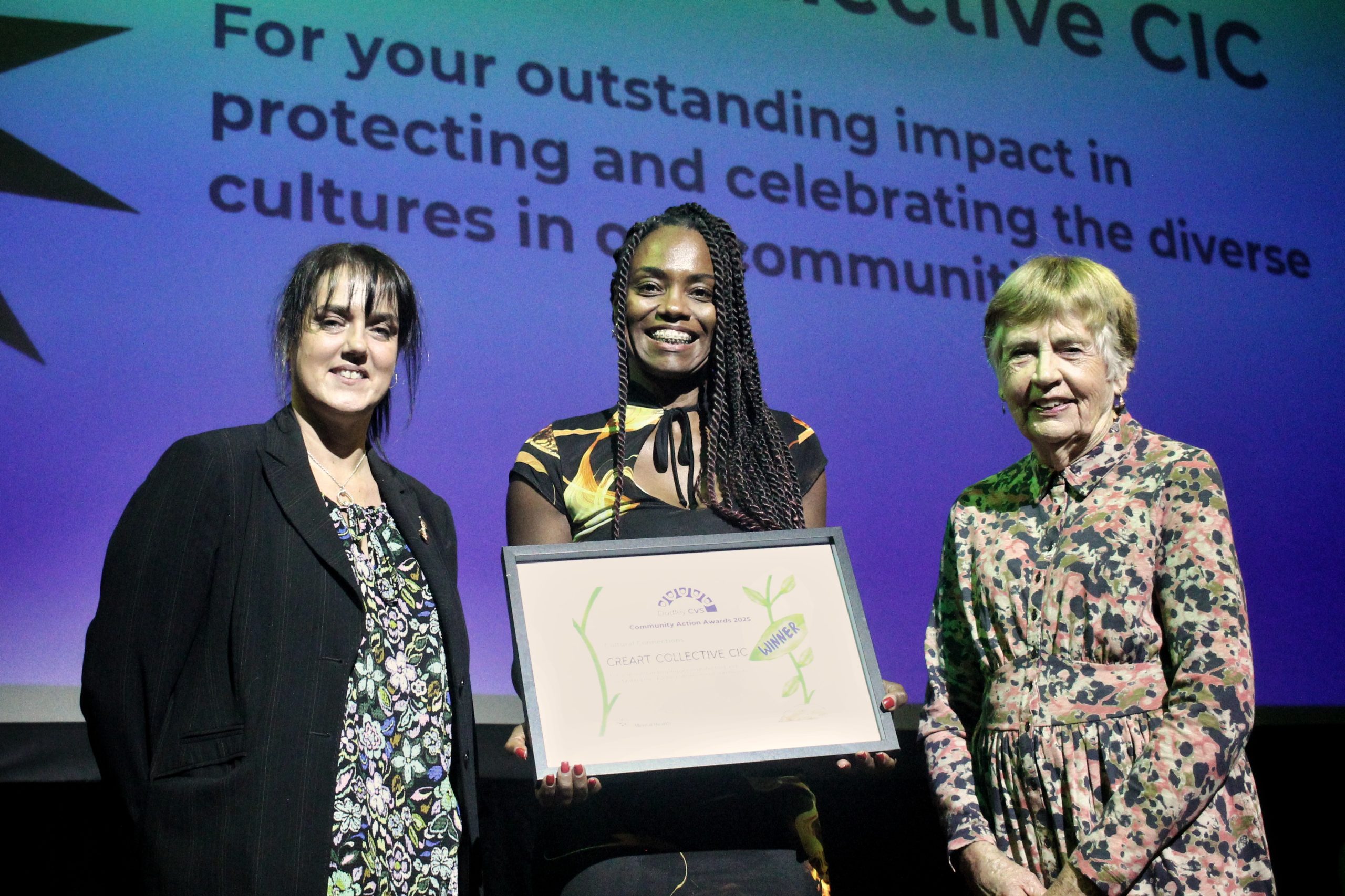
Celebrating success for CReART Collective CIC

Dec. 08, 2025
From Warm Welcomes to Open Doors: Three Years of Community Connection

Dec. 03, 2025