
Welcome to February’s funding update.
This update is split into two parts. Section A features funders with a local or regional focus. Section B features funders who work across England. In both sections, funders are listed in order of deadline date, soonest first. Funders without a deadline date appear after this.
This update can only provide a snapshot of these funders so we recommend visiting the funders’ websites for full details before you apply. Most funders in this list have a website, which you can access by clicking on the name of the funder. Full contact details have been provided for funders that do not have a website.
A. Funders with a local/regional interest
Who can apply: Not-for-profit organisations working with children and young people are eligible to apply.
Applications will be considered from the following:
- Registered charities.
- Unincorporated charities.
- Not-for-profit organisations.
- Community Interest Companies (CICs).
- Community groups that have a constitution and can produce accounts.
The Trustees are particularly keen to support smaller organisations.
Applicants may apply for funding year on year for a maximum of three years.
Organisations with an income of more than £250,000 can apply but must have a project with an annual income of less than £250,000 that has a distinct ring-fenced bank account either in the name of the project or held in restricted funds within the organisation’s audited accounts.
Size of grant available: Grants of up to £2,000 are available.
Applicants may apply for funding for a maximum of three years.
Priorities: The Trust aims to support not-for-profit organisations working to directly benefit children and young people who are experiencing disadvantage in the West Midlands.
How to apply: Applications may be submitted at any time and are considered at meetings held four times a year in January, April, July and October.
To be considered at the next panel meeting applications should be submitted at least 21 days prior to the beginning of the month in which the meeting is being held.
Application forms can be downloaded from the Trust’s website or requested by email.
The Trust prefers completed application forms to be returned by email, but will accept postal applications if this is not possible.
For further information contact the Trust. In an effort to reduce administration costs, no correspondence or telephone conversations will be entered into with regard to applications that have already been submitted.
Oakley Charitable Trust
Who can apply: UK registered charities are eligible to apply. Priority is given to charities based in the West Midlands.
Size of grant available: Funding is at the discretion of the Trustees. The Trust awards around £75,000 in grants each year.
Grants are typically between £1,000 and £3,000. Occasionally larger grants are awarded.
Priorities: The Oakley Charitable Trust offers grants to UK registered charities for a wide range of charitable activities.
The trustees’ current policy is to support a number of core charities. However, a small amount of the funding budget is set aside for which other charities may apply.
How to apply: There is no application form.
Applications must be made in writing and the letter should be posted to the Grants Administrator.
The Trustees generally meet in March, July and November to consider applications.
Decisions are typically communicated within two weeks of the meeting.
Unsuccessful applicants may apply again the next year.
For further information on how to obtain this fund, please contact the following:
Trust Administrator
The Oakley Charitable Trust
Office 25 Quadrant Court
48 Calthorpe Road
Edgbaston
Birmingham
B15 1TH
 West Midlands – UK Shared Prosperity Fund: Social Economy Growth Programme
Who can apply: Applications are open to social economy organisations in the West Midlands, including social enterprises, community businesses, cooperatives and charities.
Size of grant available: Up to £1,000
Priorities: The programme is focused on helping organisations in the social economy sector strengthen their business capabilities, become more sustainable, increase trading income and expand their social impact.
How to apply: Applicants should register their interest by completing the short form available on the Business Growth West Midlands website. An adviser will be in touch with further information and support.
Heart of England Community Foundation – Women and Girls Fund
Who can apply: Applications to the Heart of England Community Foundation are generally accepted from:
- Registered charities.
- Charitable incorporated organisations.
- Constituted community groups.
- Companies limited by guarantee with charitable aims.
- Community interest companies.
- Co-operatives – registered community benefit societies and
registered industrial and provident societies. - Social enterprises.
Groups must have an income equal to or less than £500,000 and be working in the area of benefit.
Social enterprises and CICs should review the additional guidance for them, which can be found on the Foundation’s website.
Size of grant available: The foundation has seeded the fund with £50,000 from the Foundation’s own resources and aims to raise an additional £100,000, with donations matched up to £50,000 to maximise impact.
Grants are at the discretion of the foundation.
Priorities: This fund aims to support the unique and diverse issues faced by female communities in the Heart of England region. From lack of access to sports, domestic violence, income inequality, reproductive rights, to mental health and self-esteem challenges – the needs of women and girls are multifaceted and often overlooked.
How to apply: Information on future funding rounds will be provided when it becomes available.
Applications can be made online via the Foundation’s website.
Enfinium Community Fund
Who can apply: Applications are welcomed from registered charities, schools, places of learning, not-for-profit companies, community organisations and groups, including those supported by public funding.
Applicants need to be based within a 10-mile radius of enfinium’s facilities in Kent, North Wales, West Midlands, and West Yorkshire.
Organisations based outside of the catchment area are also eligible to apply for grants.
Size of grant available: Around £185,000 is allocated for the 2026 funding programme.
The level of grant has not been specified.
Priorities: The funding is available for local groups and organisations based near an enfinium facility for any of the following causes:
- Environment (for example the promotion of clean energy, waste reduction and/or recycling improvement)
- Education
- Improved standards of health, safety and wellbeing
- Social inclusion and community wellbeing
- Young people
- Enhancement of the wider community (including skills and educational development, environmental improvements and activities that improve community cohesion).
How to apply: Application criteria and applications forms can be downloaded from enfinium’s website. The completed form can be submitted either by email or by post to enfinium.
The Communications Team
enfinium
123 Victoria Street
London
SW1E 6DE
Tel: 0800 860 6251
Email: communityfunding@enfinium.co.uk
Resonance Enterprise Investment Fund
Who can apply: Applications will be considered from VCSE organisations operating in the South West, West Midlands and North West of England, including:
- Social Enterprises.
- Community groups.
- Charities (with trading income).
- Community Interest Companies (CICs).
- Charitable Incorporated Organisations (CIOs).
- Companies limited by shares (with a profit cap and asset lock).
- Companies limited by guarantee.
- Community benefit societies.
Size of loan available: Loans of between £25,000 and £250,000 are available through the following finance products:
- Launchpad loans- smaller, starter loans for VCSE organisations starting their growth journey.
- Unsecured loans- larger loans of up to six years for VCSE organisations with clear growth potential.
- Revenue share loans (quasi-equity) – equity-like, patient investment for high growth VCSE organisations, a share of revenue is paid rather than a fixed interest rate (sharing risk and reward).
- Equity – patient investment for high VCSE organisations with viable exits and suitable legal structures.
Each finance product can be tailored by the funder to the specific needs of the applicant organisation.
Interest rates are fixed at the point of investment and all investments from the fund are unsecured.
Interest rates are set between 6.5% and 8.5% pa cost of capital (revenue share agreements and equity investment options are also available).
The term of repayments can be from three to ten years.
Priorities: The objective of the funding is to provide growth capital to VCSE organisations that are:
- Tackling socio-economic inequality.
- Improving health and wellbeing.
- Supporting a just transition to a low-carbon economy.
How to apply: Expressions of interest are open and will be considered on a rolling basis. An online expression of interest form is available on the Resonance website. Following submission of the expression of interest form, organisations that are eligible for the funding will be contacted by Resonance to arrange a more detailed discussion of the proposal and how to proceed with the application.
Bernard Piggott Charitable Trust
Who can apply: Registered charities working in the greater Birmingham area or North Wales may apply. To be eligible to apply charities must be able to provide:
- Audited accounts from the previous year.
- A report on the income and expenditure budget for the proposed project.
Size of grant available: Previous grants have been awarded of between £250 and £5,000.
Priorities: The Bernard Piggott Trust provides grants to registered charities working in The greater Birmingham area, Solihull, Wolverhampton, Dudley, Sandwell, Coventry, Wrexham, Flintshire, Denbighshire, Gwynedd, Conwy or Isle of Anglesey. Funding is available to charitable organisations or for charitable activities. Sponsorships and research projects may also be eligible for grants.
How to apply: Applications can be submitted at anytime and are considered twice a year by the Trust in May/June and in November/December.
An online application form is available on the Trust’s website.
B. National Funders
Fat Beehive Foundation
Deadline: 31st March 2026
Who can apply: UK registered charities with an annual average income of less than £1 million may apply.
Successful applicants must agree to commence work on their project within three months of being awarded a grant.
Size of grant available: Grants of up to £2,500 are available.
Priorities: The funding is intended to support the creation of websites or digital products that enable small charities to carry out their work in a more efficient and effective way, resulting in positive social benefit.
As only a limited number of projects can be supported based on the funding available for distribution, each year the Foundation determines priority areas for support and invites applications accordingly.
How to apply: Applications can be submitted at any time
Applications are reviewed at trustee meetings in April and October.
The deadlines for applications are:
- 31 March 2026 for the April 2026 meeting
- 30 September 2026 for the October 2026 meeting.
The online application form can be found on the Fat Beehive Foundation website.
Applicants will need to provide at least one quote as part of the application process, which will be assessed by Fat Beehive Foundation, to ensure value for money and the realistic prospect of development.
All applications will be subject to an initial assessment to ensure they meet the basic criteria for funding.
Heritage Revival Fund
Deadline: 31st March 2026
Who can apply: To be eligible, applicants must be one of the following not-for-private-profit organisations or lowest tiers of local government:
- Unincorporated charities (for Project Viability Grants only)
- Charitable Incorporated Organisations (CIOs)
- Charitable Companies Limited by Guarantee
- Community Benefit Societies
- Not-for-private-profit Companies Limited by Guarantee
- Community Interest Companies (CICs) Limited by Guarantee
- Co-operatives
- Parish and Town Councils
- Independent secular organisations seeking to take ownership of a place of worship that will retain some religious use. Or an organisation associated with a worshipping community that is seeking to establish an independent secular organisation to take ownership of the place of worship, while the space will retain some religious use. Ongoing worship must account for less than half of the proposed use of the space.
Size of grant available: The total fund is £5 million.
Grants of between £5,000 and £350,000 are available.
There is one grant currently available:
- Project Viability Grants up to £15,000 for up to one year.
Priorities: The funding is intended to help communities across England rescue and repurpose neglected historic buildings.
The programme will focus on regenerating historic buildings in town centre locations by supporting community organisations to take ownership of, adapt and reuse the local heritage assets that matter to them, transforming them into thriving spaces that meet their needs.
The Heritage Revival Fund aims to:
- Maximise the regeneration benefits of community ownership and control of heritage assets, assisting in making communities fit for the future.
- Protect, enhance and safeguard historic buildings across England, offering viable new uses for disused and underutilised properties.
- Build capacity within local community groups, social enterprise, and charities.
- Pilot innovative, alternative uses, ownership structures and investment models to facilitate long term regeneration.
- Maximise the positive social and economic impacts around restoring historic buildings.
How to apply: Project Viability Grants have a two-stage application process:
- Expressions of Interest can be submitted at any time from 3 April 2025 to 31 March 2026 (midnight). Notification of decisions within six weeks.
- Those who are successful at stage one will be invited to submit a full application (stage two). Notification of decisions with two to three months of receipt of application.
Full details, including the guidance notes and Expression of Interest forms, can be found on the Architectural Heritage Fund website.
Adamson Trust
Deadline: 31st March 2026
Who can apply: Applications are accepted from individual families and on behalf of groups of children, registered charities and other organisations. Charities and other organisations must provide a copy of their latest audited accounts in addition to other information. There must be evidence of a disability from a medical or social services professional.
Size of grant available: Funding is at the discretion of the Trust. The Trustees award around £85,000 to £89,000 a year in grants.
Priorities: The funding supports organisations and registered charities that provide assistance with the cost of holidays or respite breaks for disabled children (aged 3 to 17 years) with physical, mental, or emotional impairments.
How to apply: There are four closing dates for applications each year.
Applications must be received by:
- 31 December for the February meeting
- 31 March for the May meeting.
- 30 June for the August meeting.
- 30 September for the November meeting.
Applications are not normally considered between meetings.
Application forms can be found on the Trust’s website.
Association for Industrial Archaeology – Restoration Grants
Deadline: 31st March 2026
Who can apply: Not-for-profit organisations such as trusts, charities and community interest companies in the UK are eligible to apply.
The heritage asset must be:
- Covered by a conservation policy and/or conservation statement.
- Sustainably managed, displayed and interpreted for the public and with full public access.
Size of grant available: Two funding streams are available:
- Major projects – up to £30,000. Grants must form a significant portion of the total project costs (normally, at least 20% of the total project costs).
- Small projects – up to £10,000 for projects with total costs of no more than £12,500.
The grant is for capital funding only, not ongoing revenue funding.
Priorities: Funding is available for the restoration of historically, technically, architecturally, and/or archaeologically important industrial buildings, structures, machinery, vehicles and vessels within the UK.
How to apply: The annual deadline for applications is 31 March.
An application form and guidance is available on the Association for Industrial Archaeology website.
Baily Thomas Charitable Fund
Deadline: 31st March 2026
Who can apply: Applications will only be considered from voluntary organisations which are registered charities or are associated with a registered charity. Exempt charities such as schools, Parent Teacher Associations and Industrial & Provident Societies can also apply.
Size of grant available: The Charity operates the following grant schemes:
- Small Grants: from £250 up to £9,000.
- General Grants: over £9,000.
Normally one-off grants are awarded but exceptionally a new project may be funded over two or three years, subject to satisfactory reports of progress.
Appeals received with funding requests of £9,000 and below will initially be considered under the Small Grants programme and will be referred to the next Main Grant Board Meeting.
Priorities: The Baily Thomas Charitable Fund describes people with learning disabilities as having three things:
- Global intellectual impairment (intelligence quotient less than 70)
- Need for support/help to fulfil ordinary daily activities
- Onset before the age of 18 years.
Learning disabilities may have a recognised cause, e.g. Down syndrome, Williams syndrome, but often the cause is not known.
Children, young people, and adults with learning disabilities often also have other physical and mental health conditions, disabilities, and/or impairments as well as having learning disabilities.
How to apply: Small Grant applications are accepted at any time and will be considered monthly, or as demand decrees.
The annual deadlines for submitting a General Grant are:
- 31 March for consideration in June
- 31 August for consideration in November
- 31 December for consideration in March
Applicants should check the website as submission deadline dates may be subject to change.
Application forms are available to complete online at the Fund’s website.
All applications to the fund will be subject to an independent review. Applications should be supported by two referees.
Innovation for all Foundation
Deadline: 31st March 2026
Who can apply: Registered charities based in the UK or overseas may apply.
Applicants must supply:
- An up-to-date governing document.
- Evidence of charity registration.
- A copy of their most recent set of accounts.
- A list of all current trustees and biographies
Size of grant available: A very small number of grants of £10,000, £20,000 and £30,000 are available annually.
Last year, four grants were awarded.
Priorities: The funding is for activities that meet the Fund’s theme of ‘Innovation for good’, and its objective is ‘through innovation, empowering positive benefit for those in need’.
The funder considers “Innovation” broadly, encompassing projects/charities that are new, different, innovative, technical, progressive, or creative.
Projects that are ‘sustainable’, meaning projects that are respectful of the environment and have a lasting impact, are favoured.
Connections to Kilburn & Strode are also welcome.
Successful applicants will be selected by employee vote.
How to apply: This is an annual awards programme which is now open for applications with a deadline of 31 March 2026.
The guidance and application form can be found on the Innovation for All Foundation website.
npower Business Solutions Foundation
Deadline: 31st March 2026
Who can apply: To be eligible, applicants must:
- Be based within a 50 mile radius of the npower Business Solutions office in either Solihull or Leeds.
- Be a not-for-profit organisation.
- Have been operational for two years.
The following types of organisations may apply:
- Not-for-profit company
- A company limited by guarantee – registered with Companies House and might also be registered as a charity.
- Registered charity (unincorporated).
- A voluntary or community organisation that is a registered charity but not a company registered with Companies House.
- Charitable Incorporated Organisation (CIO or SCIO).
- A registered charity with limited liability. But is not a company registered with Companies House.
- Community Interest Company (CIC).
- A company registered with Companies House and the CIC Regulator.
- Religious organisation but only if the project benefits the wider community and does not include religious content.
- Co-operative or community benefit society (formerly industrial and provident societies)
- School, College, University, Academy Trust or other education establishment.
National organisations based outside these areas but with projects located with the 50 mile radius may also be eligible.
Size of grant available: Funding is available in three bands, up to £100,000.
An organisation with a turnover of more than £50,000 can apply for:
- Up to £19,999
- £20,000 to £39,999
- £40,000 to £100,000
An organisation with a turnover of less than £50,000 can apply for up to £19,999.
Priorities: The funding aims to help create stronger, greener and more sustainable local communities within a 50-mile radius of the npower Business Solutions (nBS) Foundation Leeds and Solihull offices.
How to apply: The online application form, frequently asked questions and two short videos can be found on the npower Business Solutions Foundation website.
The videos explain the eligibility criteria and provide an overview of the application process.
There are no deadlines for applications. Award decisions are made on a quarterly basis.
Woodroffe Benton Foundation
Deadline: 31st March 2026
Who can apply: The Trustees prefer to support smaller charities.
To be eligible, applicants must:
- Be a UK registered charity based in the UK with an annual income of less than £750,000.
- Have at least one full set of Accounts following charity registration.
Educational institutions are also eligible to apply for a grant whether or not they are a registered charity.
Size of grant available: One-off grants of between £500 and £2,500 are available.
Priorities: The Foundation aims to support charitable projects in the UK that provide care for the sick and elderly, conserve and improve the environment, promote education, and help those in need as a result of disaster or as a consequence of social and economic circumstances.
The focus of the March 2026 application round will be on intergenerational projects based in England, Wales, Scotland or Northern Ireland.
How to apply: There are two funding rounds per year, usually in March and August.
The next Small Grant funding round is open from 1 and 31 March 2026 or until 150 applications have been received.
Applications should be submitted via the online application form on the Foundation’s website and will be considered at the Trustees’ meeting on 22 April 2026.
Successful applicants will be contacted within two weeks of the meeting.
Jean Sainsbury Animal Welfare Trust
Deadline: 1st April 2026
Who can apply: Applications are accepted from UK registered charities working in the UK or abroad. (Charities with an annual income under £5,000 do not need to be registered to be eligible.)
The Trust favours applications from:
- Smaller animal welfare charities registered as above and working in the UK and/or abroad:
- Which have independently examined up-to-date annual accounts.
- Demonstrate an active re-homing and rehabilitation policy for animals taken into their care, unless the animals are endangered species.
- Are involved with conservation of wildlife, where the rescue, rehabilitation and (when possible) the release of animals is their main aim.
- Charities which also import animals from overseas into the UK must satisfy the additional criteria in order to be able to apply for a grant:
- Support work within the country of origin which benefits animals remaining within that country.
- Ensure each animal is imported legally and in accordance with current DEFRA guidelines applicable to the particular country of origin.
- Ensure each animal has been examined by a vet following its arrival in the UK.
- Have their own permanent premises in the UK suitable for assessing the animal.
- Have assessed the behaviour of the animal both in its country of origin and, for a period of at least three weeks, in its UK premises and found it to be suitable for its prospective adopter.
- Ensure the animal has been neutered or spayed before being rehomed (or have made arrangements to do this once it is safe to do so).
- Have arranged a face-to-face meeting between the animal and its prospective adopter in advance of the animal being rehomed.
- Ensure the new owner is given the option of returning the animal to the charity’s UK premises if it is found unsuitable for any reason. No such animal should then be sent back to its country of origin.
Size of grant available: Funding is at the discretion of the Trustees.
Grants range from £1,000 to a normal maximum of £10,000. Applications for these grants are considered three times a year by a panel of the trustees.
Priorities: The objectives of the Trust are to donate to projects or activities encompassing one or more of the following areas:
- The benefit and protection of animals.
- The relief of suffering in animals.
- The conservation of wildlife.
- The encouragement of a greater understanding of animals.
How to apply: The deadlines for applications each year are:
- 1 December (for the Spring meeting).
- 1 April (for the Summer meeting)
- 1 August (for the Autumn meeting).
Application forms and guidance are available on the Trust’s website. The forms (one for new applicants and one for past applicants) can be completed online or downloaded and returned by email.
Oak Trust
Deadline: 1st April 2026
Who can apply: UK registered charities are eligible to apply.
Preference will be given to small charities with a turnover below £1 million.
Size of grant available: Grants are made between the values of £250 and £4,000.
Priorities: The Trust supports people who are disadvantaged, plus medical and environmental charities are funded.
How to apply: Applications may be submitted at any time and are considered twice a year:
- Spring application deadline: 1 April
- Autumn application deadline: 1 October
An online application form is available at the Trust website. Applicants will be notified within 10 days of the meeting.
Sasha Foundation
Deadline: 1st April 2026
Who can apply: Established charitable organisations can apply.
Priority will be given to grassroots community groups and small-to-medium-sized voluntary organisations.
Groups must have:
- A governing document.
- A governing body of at least three unrelated individuals.
- A bank account in the group’s name.
Size of grant available: Typically, grants will be up to £10,000 and at most will be for up to 50% of the total cost of the proposed project.
Priorities: This fund aims to support charitable organisations working with young people, with a preference for those suffering from depression and mental health issues, or those who are confronting drug abuse issues.
Additionally, the Foundation supports education and healthcare projects and programs in the third world, with a preference for education for young women.
How to apply: The trustees meet a minimum of twice a year to consider applications. The deadlines for applications are:
- 1 April.
- 1 October.
Guidance notes and an application form are available from the Sasha Foundation website.
Completed applications should be submitted by email or post to the Foundation’s accountants.
Sasha Foundation
c/o Richardson Swift
11 Laura Place
Bath, BA2 4BL
Email: info@thesashafoundation.co.uk
Allen Lane Foundation
Who can apply: Small registered charities, voluntary groups and charitable organisations in the UK can apply.
Registered charities are eligible to apply as well as other organisations which are not charities, but which seek funding for a charitable project. This could include, for example, constituted voluntary groups or Community Interest Companies (CICs).
To make sure its grants have an impact, the Foundation will not fund larger organisations. If an organisation works in a relatively local area – a village, or estate or small town – to be eligible it will have an income of less than about £100,000. At the other end of the spectrum, an organisation which works across the whole of the UK will be eligible if it has an income of not more than about £250,000.
Size of grant available: The Foundation typically makes around 130 to 150 grants in a year with a total value of between £720,000 and £800,000.
The maximum grant is £15,000. This can be a single grant, or over two to three years.
The average grant is £5,000 to £6,000
Priorities: The Foundation makes grants to voluntary not-for-profit organisations in the UK for work which benefits groups of people who are under-represented in UK society.
Overall, the Foundation wishes to fund work which:
- Will make a lasting difference to people’s lives rather than simply alleviating the symptoms or current problems.
- Is aimed at reducing isolation, stigma and discrimination.
- Encourages or enables unpopular groups to share in the life of the whole community.
How to apply: All applications received up until early April 2026 are likely to be considered in the lead up to the June 2026 Trustee meeting.
Applications can be made at any time and are considered three times a year, generally in February, June and October.
Processing an application and making a grant usually takes between two and six months. Groups should apply as soon as they are ready as applications are processed ‘all the time’.
The Foundation has an online application system. The first step is to go through the online eligibility quiz. Those who are eligible will be directed to the application form.
Groups with queries should contact the following people at the Foundation.
Contact Tim Cutts for enquiries or applications relating to the following beneficiary groups:
- Offenders and ex-offenders.
- Older people.
- Young people.
Contact Gill Aconley for enquiries or applications relating to the following beneficiary groups:
- Asylum seekers and refugees.
- Gypsies and Travellers.
- People experiencing mental health problems.
- People experiencing violence or abuse.
Gill Aconley
Grants Officer
Allen Lane Foundation
90 The Mount
York
YO24 1AR
Tel: 01904 613223
Email: gill@allenlane.org.ukTim Cutts
Executive Secretary
Allen Lane Foundation
90 The Mount
York
YO24 1AR
Tel: 01904 613223
Email: tim@allenlane.org.uk
Dharma Endowment Fund
Who can apply: Applications are invited from not-for-profit organisations whose initiatives align with the Fund’s Dharma-based focal areas, including community and cultural organisations, charities, educational organisations, and faith and community based groups.
Size of grant available: There is no fixed grant amount; awards are made on a case-by-case basis and vary depending on the project proposal and the availability of funds.
Priorities: The Dharma Endowment Fund awards grants to organisations whose work aligns with Dharmic principles, such as compassion, stewardship and wisdom, and supports initiatives that strengthen spiritual wellbeing, ethical living, education, environmental stewardship and cultural outreach. The Fund aims to invest donated capital and use the income generated to sustain long‑term impact for Dharmic causes, offering mentoring, networking and guidance in addition to financial support.
How to apply: Organisations with initiatives that align to the Fund’s focal areas can submit an expression of interest via the Dharma Fund website, after which shortlisted applicants are invited to submit a detailed proposal.
Applications are reviewed and grants awarded on a rolling basis, subject to available funds.
@DudleyCVS
/CVSDudley
/CVSDudley
/CVSDudley
Recent Articles

Feb. 18, 2026
Gathering Press – drop in screen printing

Feb. 06, 2026
The Power of young people in volunteering – and how we’re supporting them at Dudley Volunteer Centre
Jan. 09, 2026
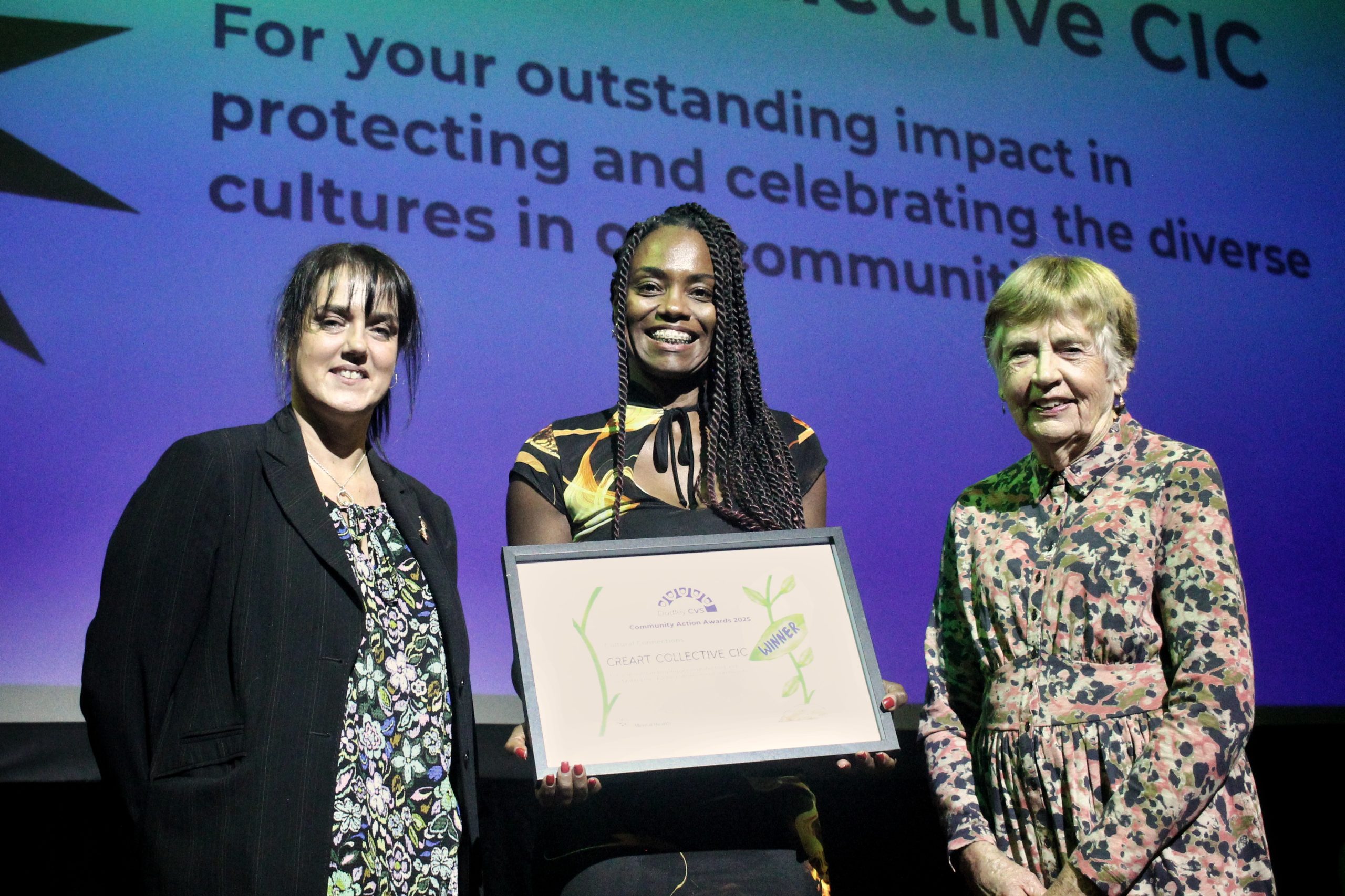
Celebrating success for CReART Collective CIC

Dec. 08, 2025
From Warm Welcomes to Open Doors: Three Years of Community Connection

Dec. 03, 2025