
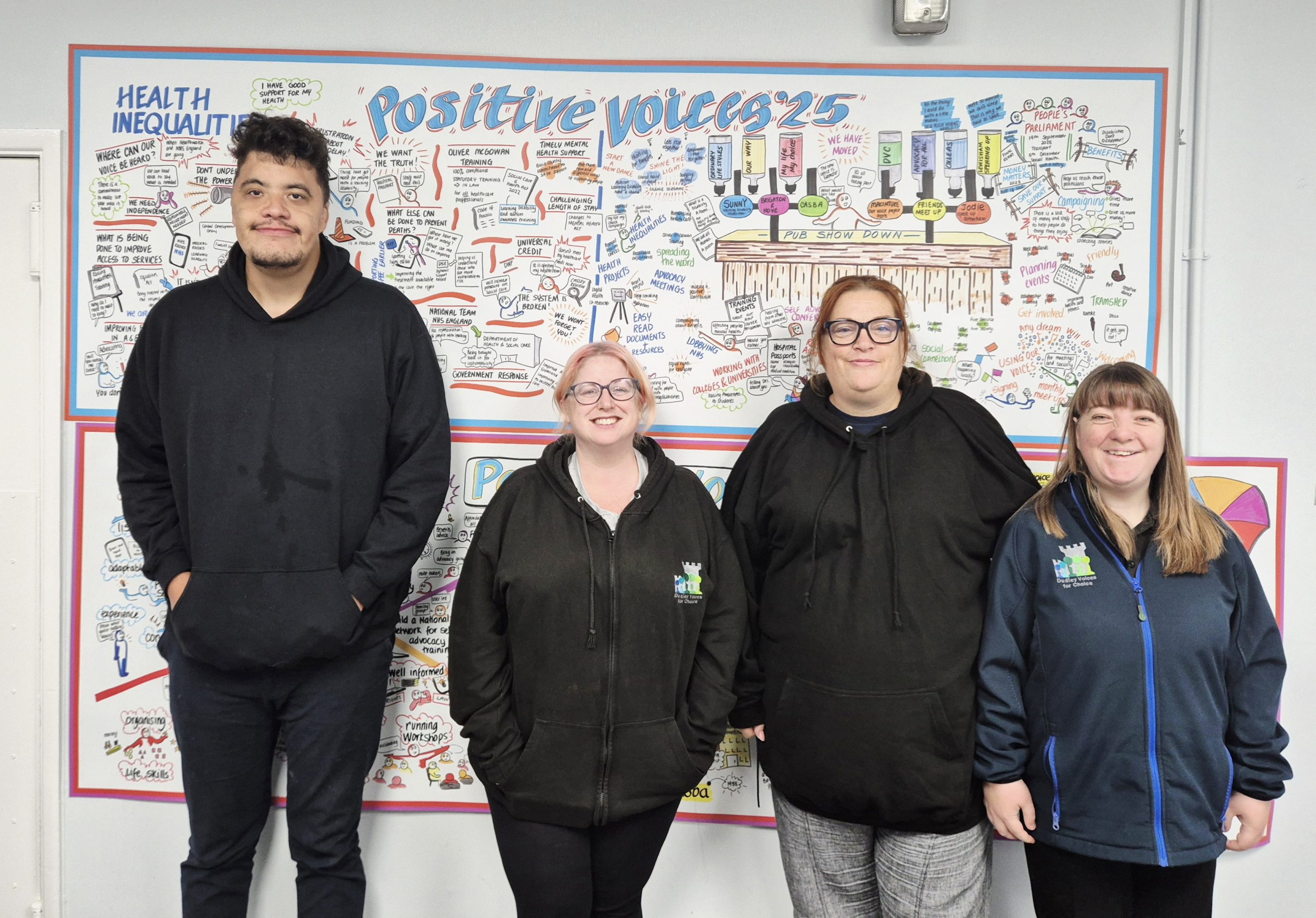
I recently caught up with Sarah Offley, Chief Officer at Dudley Voices for Choice, a charity built around a simple but powerful idea: people whose lives decisions affect should have a real say in making them.
What does good leadership look like? Sometimes it means making a difficult decision, setting a clear direction or taking a risk. At other times, it means slowing down, listening and accepting that involving everyone takes time.
For Sarah, that second approach matters enormously. It is also, she readily admits, not always the easiest way to lead.
“I probably lean too much towards the democratic side,” she says. Sarah wants everyone involved in decision-making and wants people to understand why the organisation does what it does. That doesn’t mean everyone must agree, she explains. But people should understand the reasons behind decisions.
This approach tells us a lot about Sarah and about DVC itself. The user-led charity supports people with learning disabilities and autism to speak up for themselves. Its guiding principle captures that purpose perfectly: “Talk to us, not about us.”
For Sarah, those words are more than a pithy slogan. They shape the way she works and leads.
Taking the time to do things properly
Sarah has worked at DVC for 17 years. She joined after becoming frustrated with changes in her previous role. Work that once focused on smaller groups and helping people participate in their communities had shifted towards larger, more impersonal, centre-based provision. DVC offered a chance to work differently.
Her commitment to involving people faced a major test when DVC began the process of becoming an independent charity. Sarah had never guided an organisation through that process before. Yet she was determined to involve the people DVC supported at every stage. She wanted everyone to understand what was happening, access information in a suitable format and have a genuine opportunity to participate.
It was hard work, she recalls, but worth it. People understood what was going on.
That experience still shapes DVC’s approach. Team meetings give people space to talk openly, work through problems and decide together how the organisation should develop. Sometimes the tools are simple: a big piece of paper, plenty of pens and a willingness to hear different views. Focus groups and regular feedback also help the team understand what people want, what’s working and what needs to change.
Proper participation means resisting the temptation to rush into decisions. It also means recognising that involving everyone isn’t always straightforward. Sometimes, leaders still need to make a decision and explain their reasons afterwards.
Sarah doesn’t claim to have found a perfect formula. What matters is that people understand decisions and have genuine opportunities to influence them.
When people’s voices lead to action
The real test of a user-led approach is what happens in practice. At DVC, people with learning disabilities and autism do far more than comment on the services they receive. They work for the organisation, develop their skills and help shape its activities. They also influence the wider systems around them.
More than 80% of Sarah’s team have a disability. Many deliver training, share their experiences with professionals and help organisations understand life from the perspective of the people who use their services.
Turning lived experience into expertise
DVC’s Experts by Experience approach recognises that lived experience brings knowledge that nobody can acquire in quite the same way elsewhere. Its training covers learning disability and autism awareness, alongside sessions tailored to individual organisations.
Sarah recalls how people sometimes arrive at training unsure what to expect, then leave with a very different understanding. One mother contacted DVC after noticing a change in the way a professional worked with her son. Following the training, he asked more relevant questions and took a different approach to consultations.
For Sarah, this shows how change happens on the ground. DVC’s trainers don’t simply tell people what they need to know. They help change the way services work and the experiences people have.
Giving people real choices
DVC puts the same principle into practice within its own community. Sarah recalls how Sam interviewed five dance teachers before choosing the person she wanted to run her dance class.
That process gave Sam a meaningful say in something that mattered to her. It’s a straightforward example, but an important one. Being user-led isn’t just about asking people what they think. It’s about creating the conditions for them to make decisions and take the lead.
DVC also helps people access information, speak up in meetings and influence discussions about services and policy. Its work has included supporting people in secure hospitals to have their voices heard, contributing to regional self-advocacy networks and working with Dudley Council on its learning disability community strategy.
From local roots to wider influence
DVC’s reach now extends beyond Dudley. Its Positive Voices Conference, for example, brings self-advocates together from across the country.
Interestingly, Sarah says DVC never set out to become a national organisation. The team focused on its local community, built relationships and took opportunities as they emerged. Regional work followed, and national connections grew from there.
The lesson, she suggests, is simple: don’t rush, and things will grow organically.
Knowing when to say no
That advice comes from experience. As DVC’s reputation has grown, so have the opportunities to take on projects and work with other organisations. For someone who cares deeply about the work, turning those opportunities down can be difficult.
“I find saying no really, really difficult,” Sarah admits.
But DVC has learned the hard way that taking on too much can stretch people to their limits. The team needs time not only to deliver existing work, but also to develop, reflect and protect the organisation’s long-term sustainability.
For leaders across the not-for-profit sector, this will be a familiar dilemma. New opportunities can bring funding, influence and the chance to make a difference. Saying yes can feel like the obvious response, especially when the need is great and the work matters.
Yet Sarah’s experience shows that growth doesn’t necessarily mean doing more, as quickly as possible. DVC has developed gradually, rooted in its local community and shaped by the people involved. Its wider influence has grown from that foundation rather than replacing it.
Trust also matters. Sarah believes decision-makers are more likely to listen when an organisation consistently delivers what it promises and maintains high standards. That trust, combined with the skills and commitment of DVC’s self-advocates, has helped people influence decisions that affect their lives.
The difference people make
Ask Sarah what she’s most proud of and she struggles to pick out a single achievement. The annual Positive Voices Conference stands out, as does having a team where so many people with disabilities work and develop their skills. But individual stories bring her work to life.
Opening doors and building confidence
Sarah remembers the excitement of offering a job to Joan Lamont, DVC’s first employee with a disability. Joan, who is approaching ten years with the organisation, ran out of the office to share the news with others. She could barely contain her excitement. Sarah also remembers Sam’s reaction when she secured an apprenticeship.
These moments matter because they challenge assumptions about what people can do and which opportunities they deserve. Sarah takes particular pride in seeing people grow when society may already have written them off.
Sometimes, though, the difference is quieter.
Sarah recalls someone who had been through a difficult time and had become reluctant to engage with services. They started visiting DVC for just an hour at a time, gradually feeling comfortable enough to talk and share a coffee.
One day, as the person was leaving, Sarah told them, “That’s because you’re family.”
It was a small moment, but it stayed with her. Sarah reflects on how easily people get labelled “non-engaging” or “non-compliant”. Sometimes, what they really need is somewhere they feel comfortable and someone willing to spend time with them.
Creating a place to belong
That understanding runs through DVC’s work. The organisation’s larger premises have created more opportunities to welcome people, including those with profound and multiple learning disabilities. They also provide space for user-led activities and community groups.
The ambition goes beyond providing a service. DVC wants people to participate, build relationships and feel they belong.
For Sarah, the motivation behind 17 years at DVC is straightforward: people. She says the work has sustained her through difficult times. Her own family have also volunteered at DVC ever since she joined.
Despite recognising how much the organisation has achieved, Sarah admits she doesn’t always stop to appreciate it. Often, she sees the full picture only when she prepares the annual report and reviews the year’s activities.
A voice is only the beginning
DVC’s story offers plenty for leaders to reflect on. It shows what happens when people have genuine opportunities to shape an organisation. It also demonstrates the value of recognising lived experience as expertise, rather than treating it as something to consult.
There are practical lessons, too. Meaningful participation takes time. Growth needs to be sustainable. And sometimes saying no matters just as much as saying yes.
Sarah’s approach isn’t about avoiding difficult decisions or making sure everyone agrees. It’s about building an organisation where people understand what’s happening, have opportunities to contribute and see their voices translated into action.
That brings us back to DVC’s guiding principle: “Talk to us, not about us.”
The words are simple. Putting them into practice takes commitment, patience and a willingness to do things differently. At Dudley Voices for Choice, that’s precisely the point.
Find out more about Dudley Voices for Choice
Find out more about Dudley Voices for Choice
@DudleyCVS
/CVSDudley
/CVSDudley
/CVSDudley
Oct. 14, 2026
Making room for every voice
Sep. 09, 2026
From the ashes: An even better Fens Pool Community Centre emerges

Aug. 06, 2026
Coombeswood Canal Trust: The Hidden Gem at the End of the Canal

Jul. 17, 2026
From Feeling Overwhelmed to Looking Forward: Destiny’s Social Prescribing Journey
Jul. 13, 2026